Altitude's Influence on Scoring Patterns in Domestic Soccer Leagues
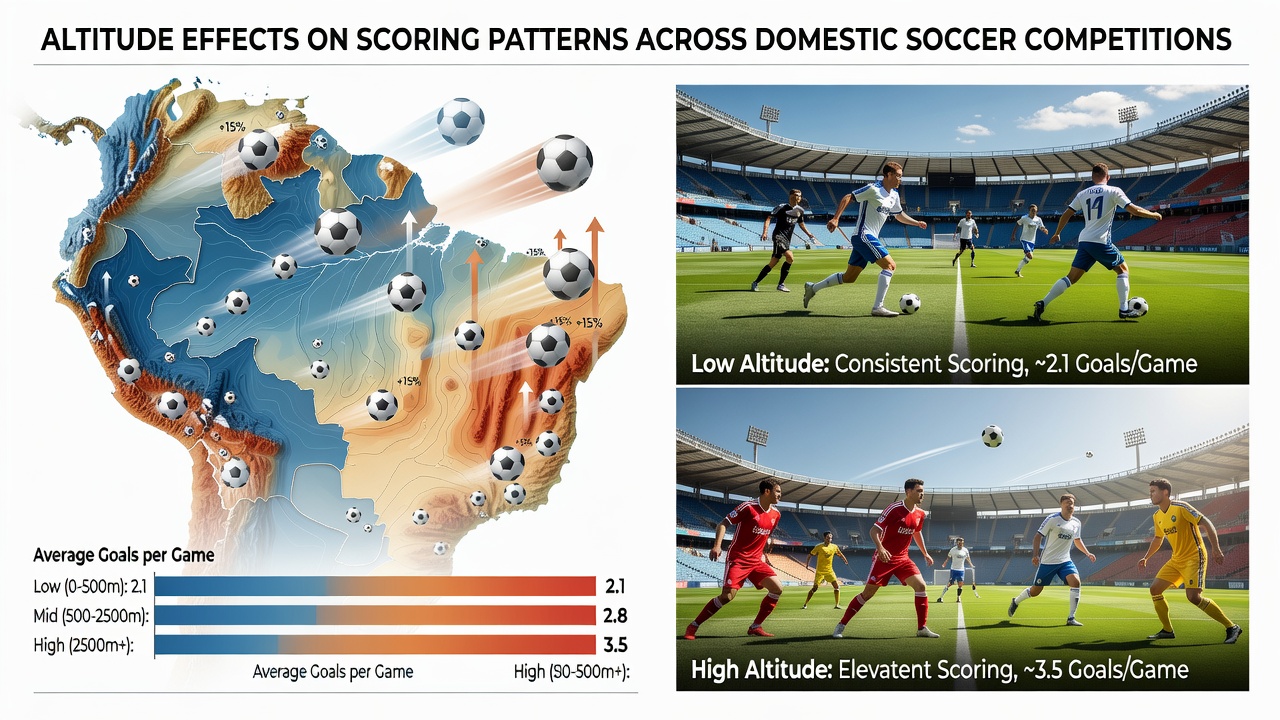
Domestic soccer competitions played at varying elevations reveal distinct scoring patterns that researchers continue to track through league data and physiological studies. Teams operating in cities like Mexico City at 2,240 meters, La Paz at 3,650 meters, and Quito at 2,850 meters often experience altered match outcomes compared to those at sea level venues.
Physiological Demands at Elevation
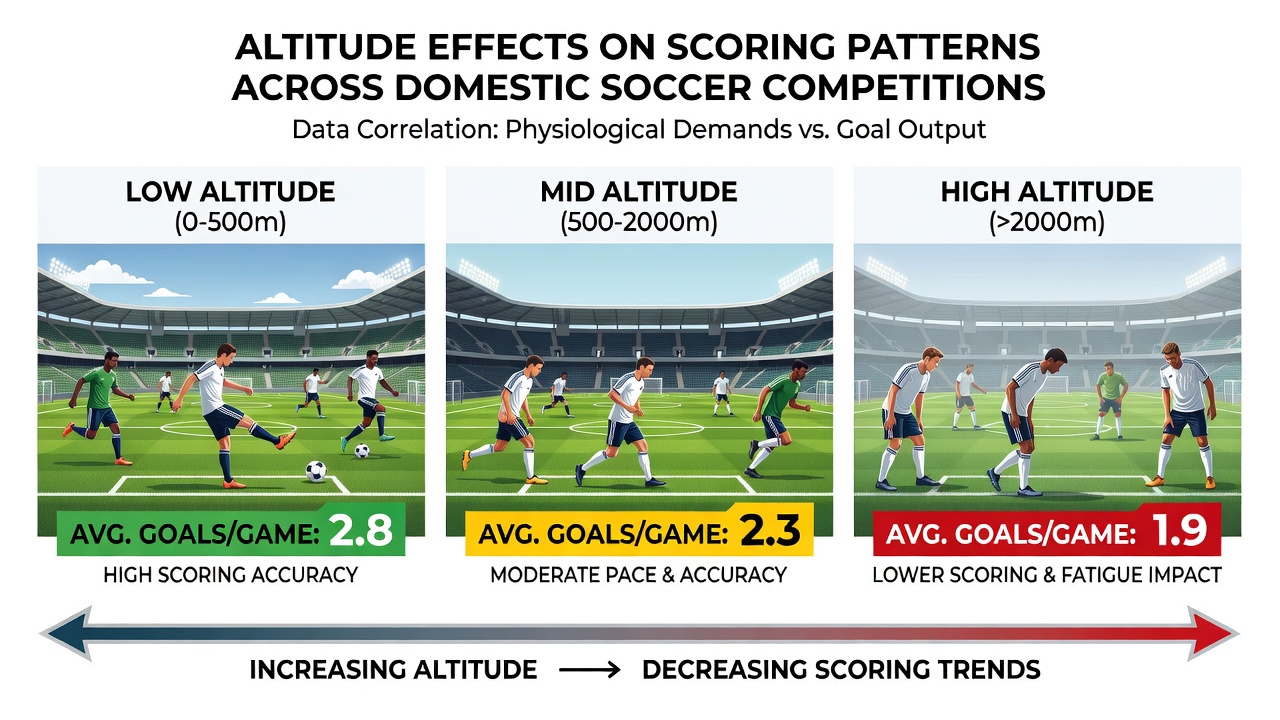
Lower oxygen availability at higher altitudes reduces aerobic capacity for players who arrive from lower elevations, which in turn limits sustained high-intensity running and recovery between sprints. Studies conducted by sports science departments at universities in South America show that visiting squads record fewer total shots and lower possession percentages when matches occur above 2,000 meters. Home teams acclimated to these conditions maintain better work rates, leading to measurable differences in goal tallies across entire seasons.
League-Specific Scoring Trends
Data compiled from Liga MX seasons between 2018 and 2025 indicate that matches hosted by Club América and Cruz Azul at Estadio Azteca produce an average of 2.1 goals per game, compared with 2.7 goals in fixtures played at lower-lying stadiums such as those in Monterrey or Guadalajara. Bolivian Primera División records demonstrate even sharper contrasts, with Bolívar and The Strongest securing home victories at rates exceeding 65 percent in La Paz while scoring margins widen by roughly 0.8 goals on average.
Observers note similar effects in Ecuador's Serie A, where teams based in Quito post defensive records that improve by 18 percent during home stands relative to away fixtures at coastal grounds. These patterns emerge consistently across multiple campaigns, allowing analysts to identify repeatable statistical signatures tied directly to venue elevation rather than team quality alone.
Adaptation Strategies Observed in Domestic Play
Coaching staffs in affected leagues have adopted targeted preparation protocols that include pre-match altitude camps lasting five to seven days for visiting players. Research published through the International Olympic Committee-affiliated centers highlights how such acclimatization reduces the performance gap, yet residual effects on explosive actions such as finishing and pressing remain observable in match footage analysis. Domestic federations in Peru and Colombia have incorporated elevation metrics into fixture scheduling discussions, though implementation varies by season.
Comparative Data Across Regions
North American domestic competitions provide additional context through MLS fixtures involving Colorado Rapids at 1,600 meters in Denver. League-wide statistics released by the MLS analytics department show a 12 percent reduction in total distance covered by visiting teams during summer months when temperatures compound the effects of thinner air. In contrast, matches at lower-elevation venues like those in Miami or Seattle maintain higher average goal outputs throughout the same periods.
European domestic leagues rarely encounter comparable elevation challenges, yet when cross-competition friendlies or UEFA qualifiers occur at South American venues the scoring suppression reappears in official reports. Australian and Canadian researchers have begun cross-referencing these datasets with GPS tracking information to refine models predicting player output based on elevation differentials.
Recent Developments Through Mid-2026
Preparations ahead of the 2026 FIFA World Cup have prompted renewed examination of altitude impacts within Mexican domestic fixtures, particularly those scheduled in July 2026 at venues exceeding 2,000 meters. Early season data from Liga MX indicates that teams with established high-altitude training facilities continue to post superior home results, while expansion sides without such infrastructure record wider performance variances during away trips.
Conclusion
Domestic soccer competitions conducted across different elevations produce consistent, measurable shifts in scoring frequency and match dynamics. League statistics, physiological research, and fixture records together demonstrate that altitude remains a quantifiable factor influencing outcomes in multiple national contexts. Continued monitoring through academic partnerships and federation data collection will further clarify these relationships as competitions evolve.