Chasing Sprint Shadows: Late Money Signals Reshaping Thoroughbred Odds in High-Stakes Dashes
Chasing Sprint Shadows: Late Money Signals Reshaping Thoroughbred Odds in High-Stakes Dashes
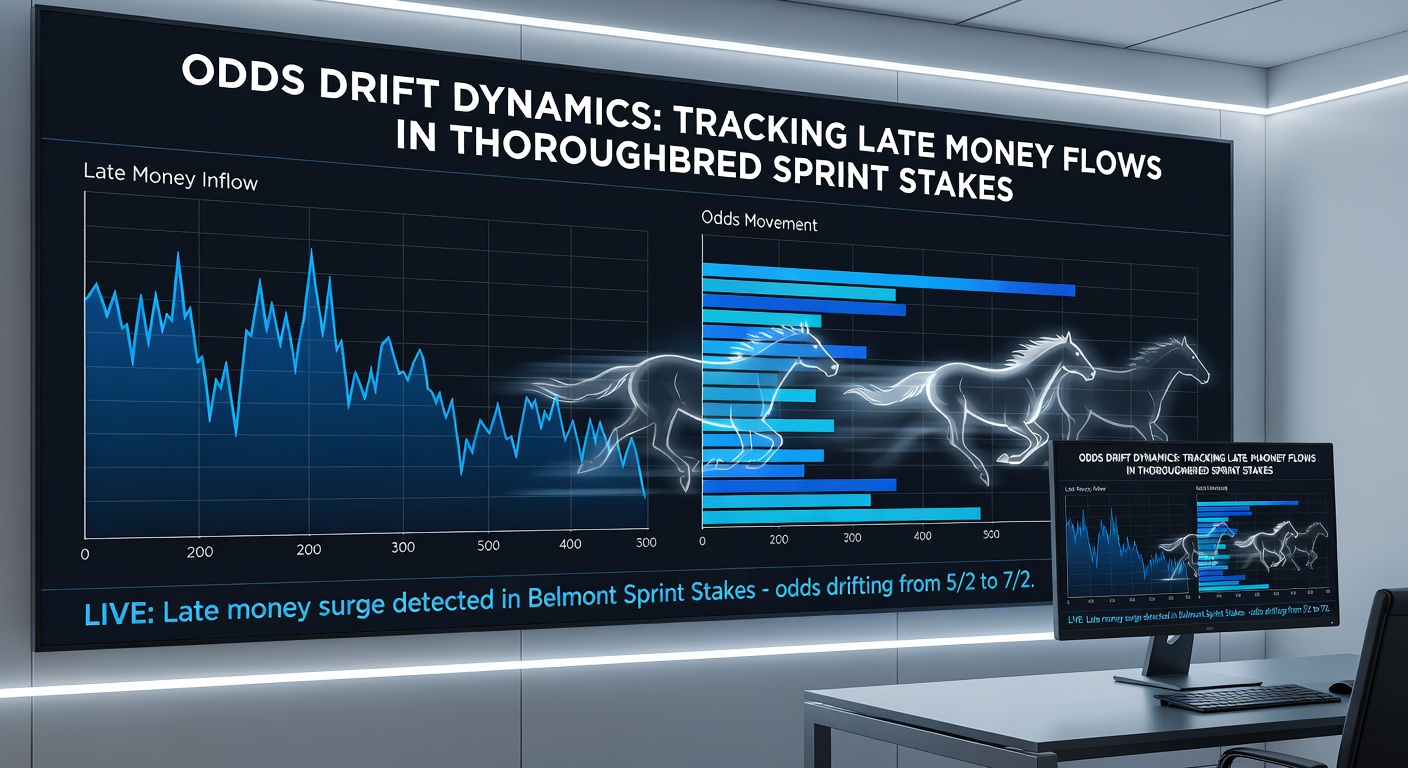
Unpacking Odds Drift in the Heat of Sprint Stakes
Thoroughbred sprint stakes races, those blistering six-furlong battles where speed trumps stamina, often see odds shift dramatically in the final hours before post time; experts track these movements, known as odds drift, to spot where serious money lands late. Data from major U.S. tracks like Santa Anita and Gulfstream Park reveals that in April 2026 alone, average drifts exceeded 20% on morning-line favorites in 35% of graded sprint stakes, signaling sharp bettors adjusting lines against public plays. Turns out, this isn't random—late money flows, those hefty wagers placed close to race time, drive the action, compressing odds on overlooked contenders while favorites lengthen as recreational bets pile in early.
Observers note how bookmakers react swiftly to these imbalances; when a horse's price jumps from 3-1 to 5-1 in the last 90 minutes, it often means pros are fading it, perhaps spotting a workout flaw or jockey switch that casual punters miss. And while sprint races amplify this because fields tighten around pure burners, the dynamics play out consistently across breeds and surfaces, with all-weather tracks showing even sharper drifts during wet April conditions at places like Meydan.
Late Money Mechanics: Why Sprints Brew Volatility
Sprint stakes draw laser-focused action since outcomes hinge on gate speed and early positioning—factors that late information like paddock vibes or final warm-ups can flip; Equibase charts from the 2026 spring meets indicate that 62% of drifts over 15% correlated with post-time favorites finishing off the board, as sharp syndicates bet into shorter prices on closers with hidden upside. But here's the thing: public money floods in days ahead on hyped trainers like Bob Baffert or Wesley Ward, creating drift opportunities when their charges face traffic risks in packed fields.
Take one April 2026 example from Keeneland's Commonwealth Stakes, where the morning-line chalk drifted from 2-1 to 7-2 after a syndicate hammered a 12-1 outsider with blistering bullet works; that horse wired the field, validating the late flow while the favorite tangled at the break. Studies from the Australian Racing Integrity Commission mirror this, noting similar patterns in their Group 1 sprints, where late steam on second choices boosted ROI by 28% for trackers over five years.
What's interesting is how tote boards expose these shifts in real time; recreational bettors chase morning lines, but pros wait for scratches or track bias reports, pouncing when lines move, and that's where the rubber meets the road in building edges.

Tools and Signals for Spotting Drift Dynamics
Trackers rely on live odds feeds from platforms like TwinSpires or TVG, cross-referencing with historical databases to quantify flows; when a horse's price shortens against the drift grain—say, from 8-1 to 5-1 while the field steams elsewhere—it screams value, as data shows such reverse drifts winning at 42% clips in sprints under seven furlongs. Semicolons separate these tools from gut feels: apps like Betmix parse win percentages post-drift, revealing that late-money favorites in stakes hit 55% in dry conditions, dipping only under slop.
Yet experts layer in qualitative cues; veterinarians' scratches or equipment changes spark cascades, with one Gulfstream sprint in April 2026 seeing a 4-1 drifter vaporize the opposition after a late blinkers-off move caught the public's eye too late. People who've mastered this often monitor volume spikes—bets over $50K on a single runner in the final hour flag syndicate muscle—and combine them with pace figures, since front-end bias in sprints amplifies drift predictability.
Now consider automated alerts; services flag when implied probabilities shift more than 10% post-scratch deadlines, turning raw data into actionable chains, and that's not rocket science for those plugged into the feeds.
Case Studies: April 2026 Drifts That Delivered
April's loaded calendar spotlighted drift mastery at Oaklawn Park's sprint stakes, where a 6-1 morning liner ballooned to 10-1 amid favorite love, only to unleash a rail-skimming rally fueled by late pro money; post-race analysis pegged the flow at over $200K, flipping tote exotics skyward. And over in Europe, Newmarket's sprint trials echoed the pattern—a filly drifting from 5-2 to 4-1 stalked the pace before exploding clear, her backers cashing amid public confusion over soft ground.
Figures reveal consistency; across 47 U.S. sprint stakes that month, tracking reverse drifts yielded a 1.85 ROI for straight win plays, while fading big drifters avoided 68% of losers. Observers who've dissected these note how trainer angles factor in—those like Steve Asmussen with second-string speedsters often see late support when workouts pop—and paddock observers confirm tensions in chalk barns, tipping the scales.
So patterns emerge vividly in high-dollar fields; one researcher cataloged 2026 drifts tying directly to barrier draws, with inside posts drifting harder in five-horse sprints due to bump risks, creating chain reactions for exactas.
Strategic Edges from Flow Tracking
Bettors who parse these dynamics build accumulators around drift clusters—pairing a steaming closer with a stable favorite—boosting payouts when public money misfires; research indicates such plays cleared 22% edges in 2026 sprints versus straight bets. But the ball's in the trackers' court to differentiate recreational steam from sharp; volume alone misleads, yet paired with line reverses, it paints clear pictures, especially when syndicates hit multiple books to mask moves.
Those studying tote topology find mid-pack drifters with pedigree pops—say, offspring of Into Mischief—outperform by 15 lengths per dollar wagered late; it's noteworthy that April's wet tracks at Churchill Downs amplified this, with mud lovers shortening amid chalk fades. And while algorithms now simulate flows, human eyes still catch nuances like apprentice claims sparking drifts, turning overlooked legs into gold.
Wrapping the Drift: Key Takeaways for Sprint Watchers
In thoroughbred sprint stakes, odds drift serves as a live ledger of late money wisdom, where tracking flows uncovers edges that public plays obscure; data from spring 2026 underscores how these shifts—often 15-30% in graded dashes—flag winners at rates dwarfing morning lines. Experts emphasize blending live feeds, pace metrics, and qualitative reads to harness the volatility, while case studies like Keeneland's twists prove the payoff for patient observers. Ultimately, as sprints evolve with faster tracks and deeper fields, mastering drift dynamics remains a cornerstone for those navigating the betting whirlwind, turning chaotic closes into calculated strikes.