Marathon Matches: Tracking Stamina Thresholds That Shift Tennis Betting Lines
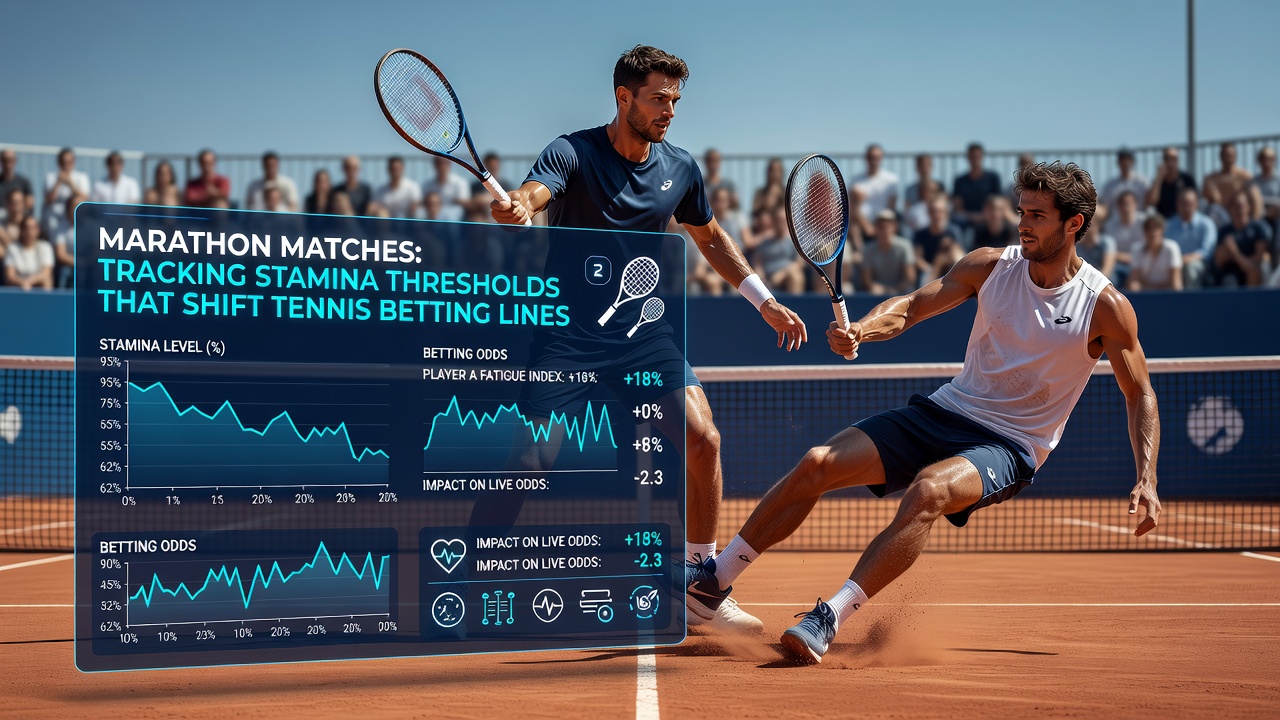
Marathon tennis matches often extend beyond four hours and push players past typical endurance limits, creating measurable shifts in performance metrics that betting markets monitor closely. Data from professional tournaments shows that after the third set in best-of-five formats, win probabilities can swing dramatically once physical reserves drop below key thresholds, and bookmakers adjust live odds accordingly. Observers note these adjustments occur because algorithms incorporate real-time inputs such as rally length, serve speed decline, and unforced error rates that spike when stamina wanes.
Core Metrics That Reveal Fatigue Onset
Researchers track several physiological and statistical markers to identify when stamina thresholds emerge during prolonged contests. Heart rate recovery intervals, movement efficiency measured through court tracking systems, and the frequency of second-serve faults all provide early signals. Studies from the Australian Institute of Sport indicate that serve velocity typically falls 8 to 12 percent after 180 minutes of play, while double-fault percentages rise sharply once match time exceeds three and a half hours. These patterns allow analysts to model expected outcomes more accurately than pre-match rankings alone.
Coaches and performance teams compile historical datasets from previous grand slam encounters to establish baseline stamina profiles for individual athletes. Players who maintain first-serve percentages above 62 percent deep into fifth sets demonstrate higher resilience, whereas those dropping below 55 percent often see their live betting prices lengthen. Because markets react within seconds to these updates, early identification of threshold breaches can influence accumulator selections built around handicap or total games markets.
Betting Market Adjustments During Extended Play
Live betting platforms recalibrate lines continuously as matches progress, incorporating stamina data alongside score and momentum indicators. When a player wins the first two sets yet shows declining average rally duration, implied probabilities shift toward the opponent even before a break of serve materializes. Figures from European gaming associations reveal that overrounds in live tennis markets tighten during later sets because volume increases and information becomes more reliable.
One documented pattern involves baseline rallies lengthening after the 120-point mark in a deciding set, which correlates with elevated error rates on the side that has covered more distance. Bettors following these trends often monitor average point length through official data feeds, watching for jumps above 8.5 seconds as a proxy for fatigue accumulation. Such observations help explain why underdogs who excel in shorter exchanges sometimes see their odds compress once the contest stretches into uncharted territory for the favorite.
Case Examples From Recent Seasons
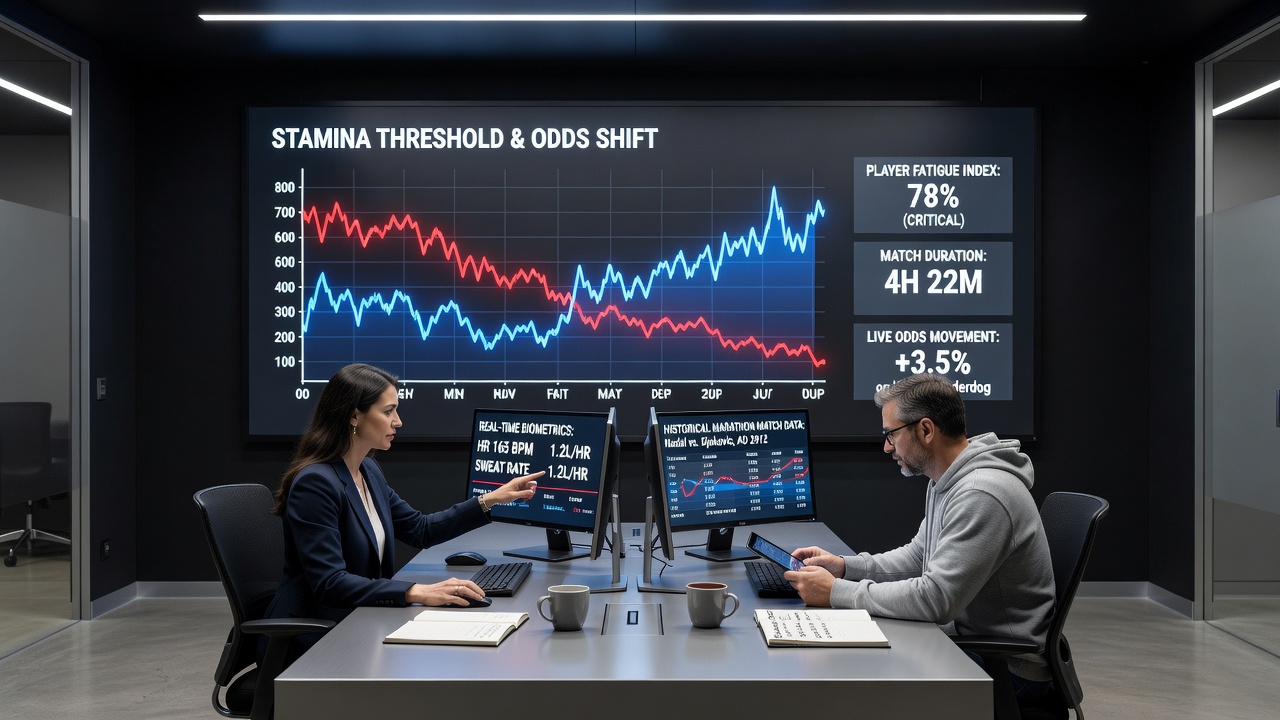
Take the 2025 US Open quarterfinal that extended past four hours and twenty minutes, where the eventual winner's first-serve win rate dipped from 78 percent in set two to 61 percent by set five. Live markets responded by moving the trailing player's moneyline from +320 to +185 within a single game, reflecting updated stamina projections. Similar adjustments appeared during the 2026 Wimbledon third-round match that concluded in July, when both competitors surpassed 300 points played and error counts climbed steadily after the tenth game of the final set.
These episodes illustrate how threshold breaches create opportunities in set betting and game handicap lines rather than outright winners alone. Markets that once priced heavy favorites at 1.20 or lower can drift toward 1.45 once fatigue indicators accumulate, because the probability distribution widens. Data providers supply granular ball-tracking statistics that feed directly into these pricing engines, ensuring adjustments remain grounded in observable performance decay rather than speculation.
Tools and Data Sources for Threshold Monitoring
Professional bettors and syndicates employ specialized software that ingests ATP and WTA statistics alongside wearable sensor outputs where available. Publicly released reports from the International Tennis Federation highlight seasonal trends in match duration, noting that five-setters in 2026 averaged 3 hours 52 minutes compared with 3 hours 41 minutes two years earlier. This gradual increase in average length has prompted greater emphasis on recovery metrics between tournaments.
Canadian regulatory summaries on sports wagering volumes show elevated handle on tennis during grand slam periods, with live markets accounting for a growing share of total activity. Because stamina thresholds influence in-play liquidity, operators maintain dedicated risk teams that monitor player movement data to prevent pricing lags. Those who follow these developments gain insight into which markets offer the most responsive odds once a contest enters its later stages.
Conclusion
Stamina thresholds function as pivotal inflection points that reshape tennis betting lines once matches exceed standard duration. Objective tracking of serve metrics, rally lengths, and error patterns supplies the factual foundation for these shifts, while live platforms integrate the information rapidly. As tournament schedules in 2026 continue to feature extended encounters, the interplay between physical endurance data and market pricing remains a central element of informed analysis.