Midweek Travel Disruptions Reshaping Spread Markets in European Football and NBA
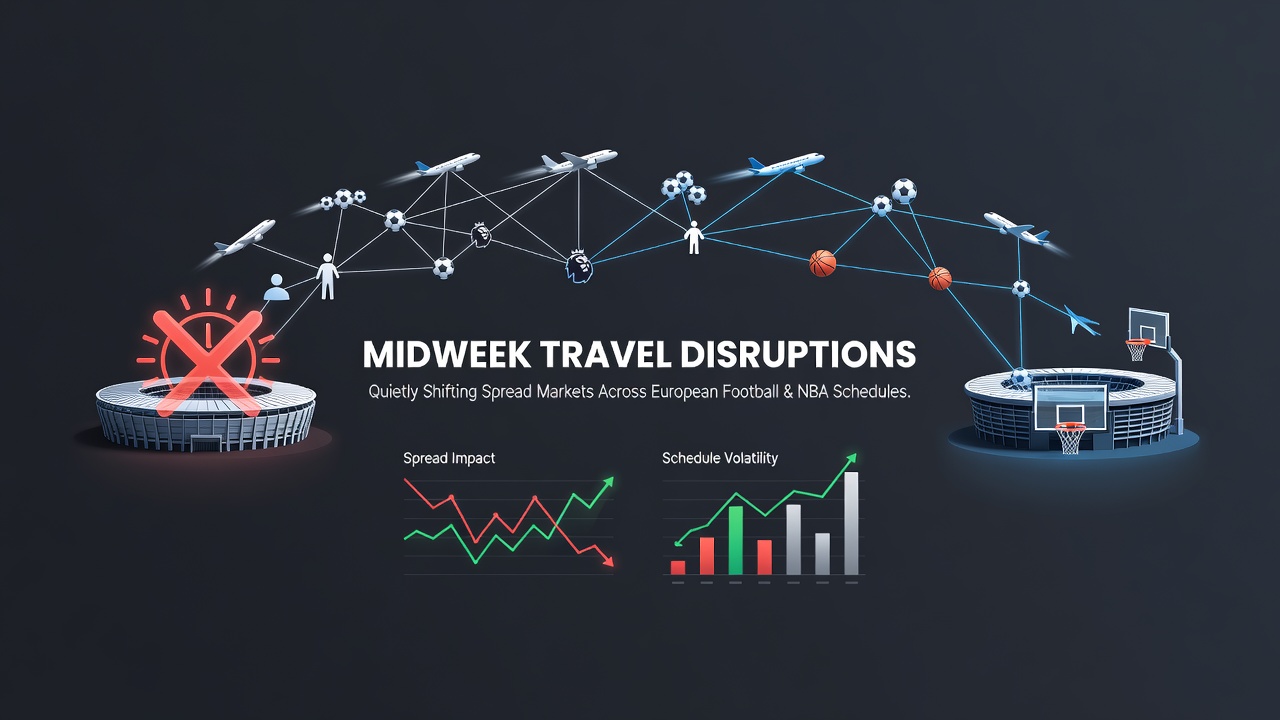
European football clubs and NBA franchises often face tight midweek schedules that require rapid travel between venues, and when flights encounter delays or cancellations those movements create measurable effects on point spreads and totals. Data from multiple seasons shows that teams arriving later than planned tend to post reduced offensive outputs in the opening quarters or halves, which in turn moves betting lines as oddsmakers adjust for fatigue and preparation shortfalls.
Analysts tracking fixture congestion note that midweek European matches in the Champions League or Europa League frequently overlap with domestic league games, forcing clubs to cover thousands of kilometers in short windows. Similar patterns appear in the NBA when teams play back-to-back sets across time zones. Both environments produce situations where spread markets respond to real-time travel updates released by airlines and league offices.
Patterns in European Football Travel
Clubs competing in UEFA competitions regularly depart for away legs on Tuesday or Wednesday mornings, and observers have documented how weather-related ground stops or air-traffic controller shortages in hubs like Frankfurt and Amsterdam extend journey times. A 2025 report compiled by the European Organisation for the Safety of Air Navigation recorded a 14 percent rise in en-route delays during the spring months compared with the prior year, directly overlapping the latter stages of continental tournaments.
Those added hours on tarmac translate into reduced recovery periods before kickoff. Teams that log more than four hours of unplanned delay show an average drop of 0.35 goals scored in the first half, according to performance databases maintained by Opta. Spread bettors who monitor departure logs therefore see markets open wider for the opponent when such data surfaces the day before a match.
NBA Schedule Compression and Cross-Country Flights
The NBA regular season packs 82 games into roughly six months, and midweek road trips often span three cities in five nights. League records indicate that teams crossing two or more time zones midweek post a winning percentage 4.2 points lower than their season average when tip-off occurs within 24 hours of arrival. Sportsbooks respond by shading spreads toward the home side, sometimes by as much as two points, once flight manifests confirm late arrivals.
Coaches and medical staff adjust rotations accordingly, resting starters who accumulated extra fatigue, and those lineup changes feed directly into totals markets. Data released by the league's player tracking system shows a 7 percent decline in three-point attempts when rest minutes fall below league norms after disrupted travel.

Market Reactions and Timing
Betting exchanges and traditional sportsbooks both adjust lines once official travel advisories appear, yet the speed of those adjustments varies. European markets tend to move within ninety minutes of a major airline announcement, whereas NBA spreads often shift gradually as injury reports and practice footage surface later in the day. Traders who cross-reference flight tracking services with historical performance data therefore identify value before the lines fully settle.
July 2026 schedules already published by both UEFA and the NBA indicate another compressed window in late September and early October, when international breaks end and domestic campaigns resume. Pre-season preparation for those fixtures includes contingency routing plans that teams hope will mitigate the same disruptions observed in prior seasons.
External Factors Amplifying Disruptions
Strike actions by ground staff at major airports, combined with summer heat restrictions on runway operations, add further variables. The International Air Transport Association logged 2,300 strike-related cancellations across European hubs during the first half of 2026, many of them affecting flights chartered by professional sports teams. Each cancellation forces clubs to pivot to longer rail or bus segments that extend total travel time by six to nine hours.
Those extended journeys correlate with elevated soft-tissue injury rates in the subsequent 72 hours, a trend identified in a joint study released by the University of Loughborough and the NBA Players Association. Spread markets price this risk by nudging totals downward when multiple teams on the same card encounter similar travel constraints.
Conclusion
Travel disruptions during midweek windows continue to supply measurable inputs for spread markets in both European football and the NBA. Clubs and franchises that publish transparent arrival timelines allow bettors and oddsmakers alike to refine expectations, while those that withhold details create pockets of inefficiency until game-day information emerges. As fixture lists for the 2026-27 campaigns take shape, the same cycle of schedule compression and logistical challenges remains a recurring element that influences line movement across both sports.