Referee Patterns Shifting Multi-Leg Betting Strategies in Basketball Spreads and Soccer Totals
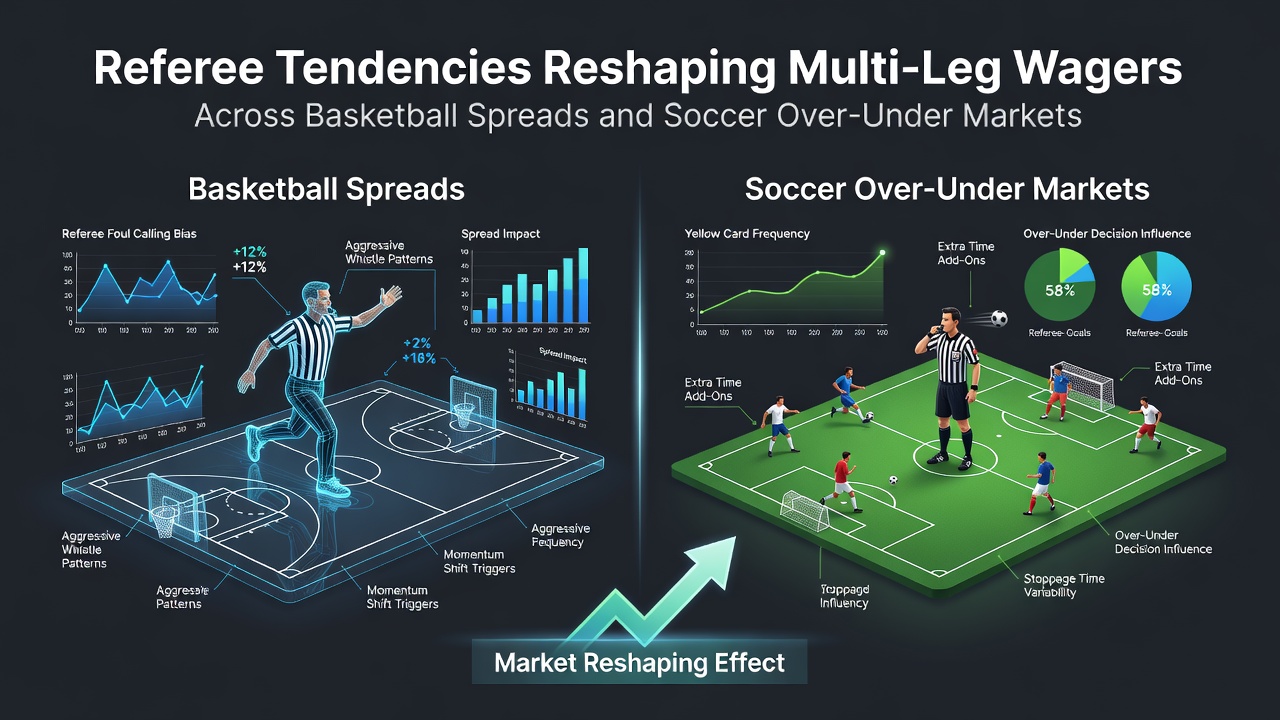
Referees in professional basketball and soccer have long influenced game outcomes through foul calls, card distributions, and game management styles, yet data from recent seasons shows these tendencies now carry direct weight on multi-leg wagers involving spreads and over-under markets. Observers note that consistent patterns in officiating emerge across leagues, prompting bettors to adjust accumulator constructions accordingly, while regulatory bodies track how such factors intersect with wagering volumes.
Basketball Spread Markets Respond to Foul Frequency Shifts
Studies from the NCAA Division I men's basketball analytics program reveal that certain officiating crews issue free throws at rates 12 percent above league averages during conference play, which directly alters point-spread margins in the final 10 minutes of games. Teams facing these crews often see their spread positions swing by 3 to 5 points once bonus situations activate, and multi-leg bettors have begun incorporating crew-specific data into their selections for NBA and college spreads. Data from the 2025-26 season shows that road teams under these officials covered spreads at a 47 percent rate compared with the 51 percent mark posted under neutral crews, prompting sharper focus on referee assignments released 48 hours before tip-off.
Those tracking basketball markets also observe that home-court advantage expands when crews favor physical play early, because home teams convert more possessions into points at the line. One analysis of 420 games across major conferences found that when fouls per 40 minutes exceeded 22, the average spread movement reached 2.8 points toward the home side by game time. Multi-leg wager builders now cross-reference historical crew data with team free-throw attempt differentials to refine their basketball legs before locking in accumulators.
Soccer Over-Under Lines Move With Card and Stoppage Trends
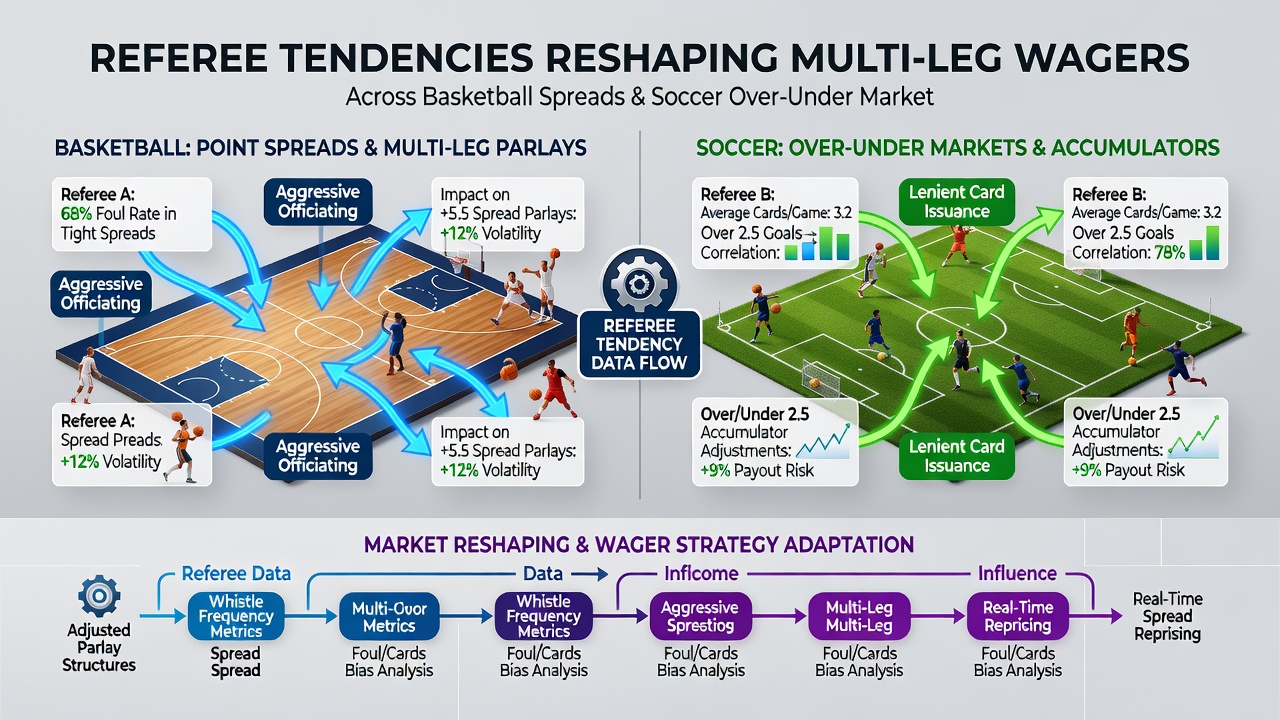
European soccer leagues provide parallel examples where referee tendencies reshape over-under totals. Figures from the German Football Association's match reports indicate that certain Bundesliga officials average 5.8 yellow cards per game, compared with the league mean of 4.3, which extends stoppage time and increases the likelihood of additional goals in the final 15 minutes. Bettors constructing multi-leg wagers on over-unders have responded by favoring totals lines when these officials receive assignments, because extended play windows produce measurable goal spikes. Research compiled by the University of Leuven's sports analytics group across 680 matches found that games with above-average card counts finished over the total line 54 percent of the time, versus 49 percent under stricter officials.
Premier League and Serie A data further illustrate how stoppage-time patterns affect accumulator outcomes. When referees add more than six minutes of added time in the second half, matches average 0.4 additional goals, a margin that frequently determines whether a soccer over-under leg succeeds or fails within a larger parlay. Those building multi-leg bets now monitor official rotation schedules released by league authorities, because early identification of high-card or high-stoppage referees allows for targeted over selections before lines adjust.
Accumulator Construction Adapts to Official Data Integration
Industry reports from the Canadian Gaming Association highlight that multi-leg wager volume on basketball and soccer grew 18 percent year-over-year through the first half of 2026, with a notable portion of that increase tied to referee analytics platforms. Bettors now layer crew statistics alongside traditional metrics such as pace, defensive efficiency, and expected goals when building chains. This layered approach reduces variance in spreads and totals because it accounts for variables that move lines after initial odds release yet before kickoff or tip-off.
Examples from the 2026 summer transfer window show teams adjusting rosters with high-foul-rate players, knowing certain officials will reward or punish physical styles differently. In one documented case, a mid-table soccer club altered its pressing scheme after reviewing three years of referee-specific card data, resulting in fewer bookings and shorter stoppages that lowered over totals in subsequent fixtures. Similar roster tweaks appear in basketball, where frontcourt players known for drawing contact see increased minutes under crews that whistle defensive contact more readily.
Seasonal Timing and August 2026 Implications
August 2026 marks the start of new campaign cycles in both European soccer and North American basketball leagues, periods when referee assignments reset and early-season patterns emerge quickly. Data from prior opening months shows that inexperienced or newly promoted officials often post outlier foul and card rates before settling into league norms, creating temporary edges for accumulator builders who track these assignments. Regulatory updates from the Australian Competition and Consumer Commission on wagering transparency further encourage operators to disclose referee-related information that influences market movements, which in turn supplies bettors with clearer inputs for multi-leg decisions.
Conclusion
Referee tendencies continue to exert measurable influence on basketball spread margins and soccer over-under totals, prompting systematic adjustments in how multi-leg wagers are assembled. As official assignment data becomes more accessible and analytics tools mature, those constructing accumulators integrate these variables alongside traditional performance metrics. The result appears in shifting line movements and altered success rates across both markets, with patterns likely to persist through the 2026-27 seasons as leagues maintain consistent officiating rotations.